Archive for category Dealing
Shake It Off: Life with Tremors
Posted by My RAD Life in Dealing, Essential Tremor, RA/RAD, Raynauds/Chilblains, Symptoms on September 12, 2014
Mine hit me right around the time that my Raynaud’s decided to show it’s full colors (no really, my hands were fantastic colors of red, white and purple). Why? Probably because I was 14 and my hormones were raging.
Whatever reason, come awkward adolescence my hands began to shake. It was worsened when trying to hold something, particularly something that was either extraordinarily delicate or scalding. It was made even worse when there was an audience or I was nervous or embarrassed. As you can imagine, class presentations were my worst nightmare.
And needless to say, awkward adolescence just got a whole lot worse…
On really bad days my head would try to shake itself off my neck. But mostly, it was my hands, with their omnipresent jitter.
Unlike when I was diagnosed with Rheumatoid Arthritis, I knew exactly what I was in for. About half the aunts and uncles on my mom’s side have these same shakes. In fact, many people around the world do. It’s called an Essential Tremor and it can cause your hands, head or voice to shake. We don’t know why and we don’t have a cure (sound familiar?).
One aunt has a particularly bad rendition – her head never pausing. So I was filled with a sense of dread and acceptance when I noticed them in myself; I was one of the unlucky ones, stuck with the shakes and destined to have it for the rest of my life.
To my surprise, by age 16 my Familial Essential Tremor had all but disappeared. Occasionally my hands would shake a bit when I was especially nervous, but it was nothing compared to what it had been a few years earlier. People stopped pointing it out. I was ecstatic.
It’s basically been a non-issue since then. But now suddenly, at the age of 31, I seem to be a bit shakier. It’s not bad enough that it’s affecting my head, but it’s been bad enough to spill hot coffee while pouring, to have people comment and stare yet again, and for me to have flashbacks back to those rough adolescent years.
Like RA and Raynaud’s Phenomenon, there is no cure for an essential tremor. It’s just … a condition. A genetic mutation, according to the Mayo Clinic.
So, what can I do? Well, avoid caffeine, alcohol and stressful situations, for starters. But, since that’s not going to happen for me right now, I’m sticking to hoping that it’ll mysteriously disappear, the reaction to a 30-something’s hormone cycle, like it did when I was 16.
Mountains Move Me: Conquering RA fatigue and depression by celebrating times of strength
Posted by My RAD Life in Dealing, Fitness, RA/RAD, Running/Marathon on September 3, 2014

On the top of Mt. Belford, a Colorado 14er. The day included 6,000 feet of elevation gain and more than 9 miles of high altitude hiking.
The hardest thing for people to understand about RA is the ebbs and flows of fatigue and pain symptoms. One moment, I can be so tired I’m unable to move from the couch, every step met with sharp pain or a dull internal throb. The next, I’m hiking a 14er or doing a high altitude half marathon. I don’t blame people for being confused.
But here’s what mountains and marathons mean to me:
When I have a flare, I get depressed. Yes, I know logically that physical symptoms have nothing to do with my mental state and that I am separate from my symptoms. But not feeling like yourself or being able to do what you want to do is depressing.
I think the symptom that gets to me the most is fatigue. The all-encompassing heaviness makes me apathetic, which leads to many hours on the couch in front of the TV, which makes me depressed, which makes me more fatigued, which makes me more depressed, and on, and on. I think you get the picture.
So on days I feel good, like really good, I am jubilant. Unstoppable.
Sign me up for a 4:30am wake up call to climb three 14,000 foot mountains in one day. Upgrade me from that 10K to a half marathon.
Give me a challenge, I want to take on the world. I want to celebrate my body and all of its strength, power and agility.
ESPECIALLY because I know all too well what it feels like to have that strength, power and agility seep away. Because of that, I embrace the good and celebrate it when it comes around.
As I told my parents, I’ll take the achy, sore muscles and satisfactory tiredness of a strenuous workout over RA pain and fatigue ANY DAY. In fact, the feeling of sore muscles makes me happy because it reminds me how strong my body is.
Sometimes pushing myself like this means I “pay for it” with more symptoms later. I used to try to regulate my exertion because of that. But I’m realizing that’s not me. I’d rather go big when I can and rest when I need to than live a more regulated life (with seemingly as many random flares) somewhere in the safe zone.
Now I know I’m quite lucky to be able to climb mountains and run races. For many with RA, this is not at all a possibility. But I hope that within any limitations you have, you are able to celebrate the good days with your own version of a mountain, acknowledging all that your body still does for you.
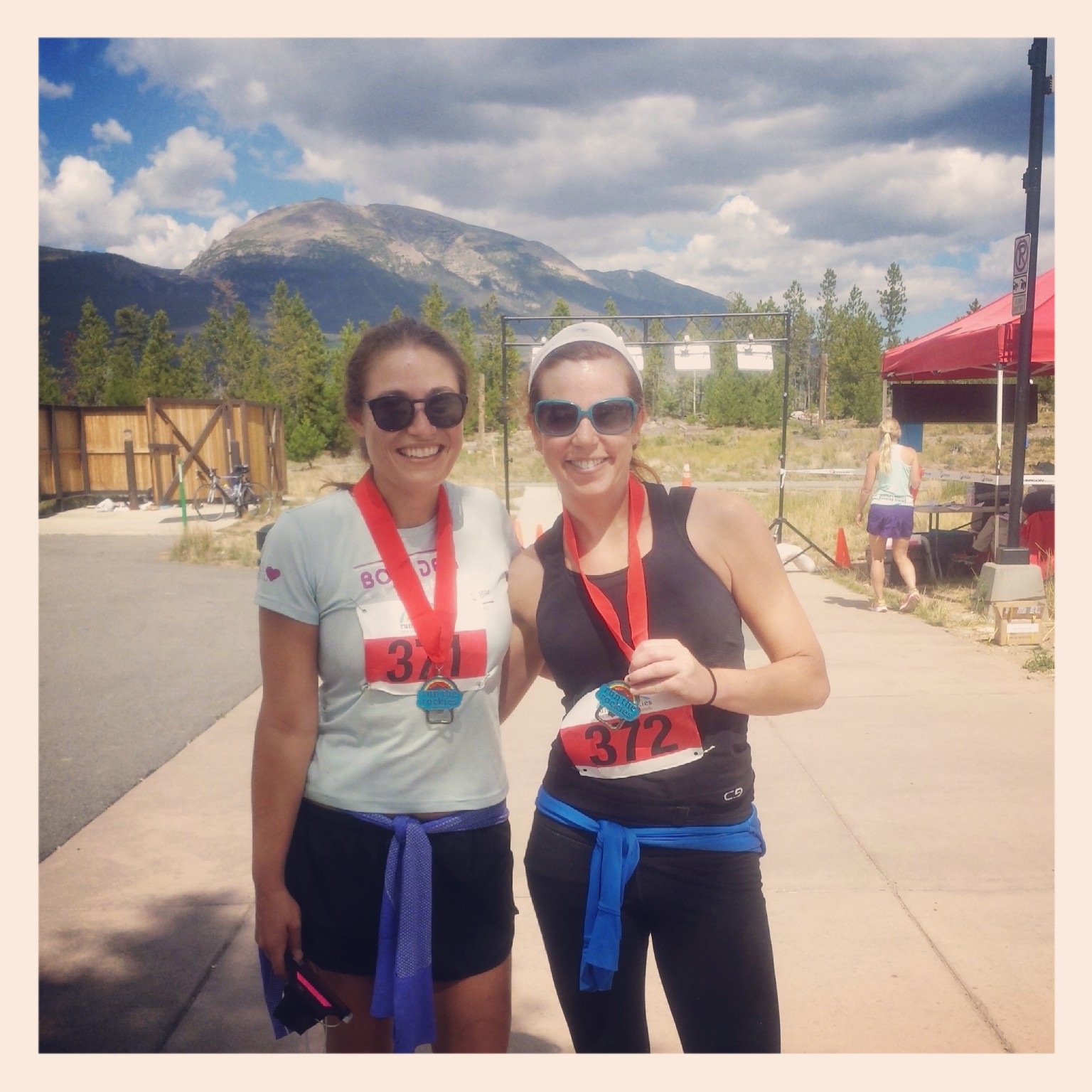
At Run the Rockies in Frisco, CO, I was feeling so good I decided to go for the half marathon instead of the 10K. It was a slow, hilly run, but I felt so damn good crossing that finish line.
A Shoe Story (Part 2)
Posted by My RAD Life in Dealing, RA/RAD, shoes, Symptoms on July 14, 2014
My RAD first presented itself in my wrists. Later, it moved to my feet, with a vengeance. Though it is now mostly under control with weekly methotrexate and Enbrel, I do still get the occasional flare. For me, this usually means very sore and painful wrists and feet, swelling, morning stiffness, and all-encompassing, is-this-what-having-mono-is-like fatigue.
I recently came back from an incredible two-week trip to Southeast Asia. (Side note: not needing to keep my Enbrel refrigerated was a lifesaver.) But the best part about the trip was, despite long days walking many miles (I think I hit 10 miles one day in Bangkok and probably a comparable amount at Angkor Wat), I only experienced swollen, sore feet, not a full-blown flare.
The return jet lag has been pretty rough and I think it wore my body down. I was exhausted and sleeping every chance I could get for about a week. I was finally feeling more like myself. Until Thursday.
Last Thursday, I felt the inkling that something was stewing. My feet were just a little more swollen and sore than they ought to have been. I decided to go for a short run anyway, because I’m still the worst at figuring out when to rest and when to push.
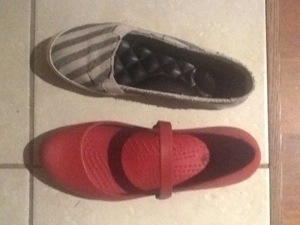
Then Friday came and my feet were so sore and stiff getting out of bed that I almost fell over. I combated it with a long shower and an outfit designed to incorporate comfortable Crocs Mary Janes, which were a half-size too big to accommodate for swelling.
Halfway through my 3/4 mile walk to the office, I felt blisters forming in addition to my already aching feet. I hobbled through.
Come lunch, I couldn’t take it anymore, so I spent my lunch break shopping for a new, more comfortable pair of shoes at a nearby store. My feet were so swollen, most the shoes in my size didn’t fit (including flip-flops!). I wound up with well-insulated Reef slip-ons.
I was invited to post-work food and drinks with co-workers, which I achingly accepted. A glass of wine did make me feel a whole lot better.
Afterward, I stubbornly wanted to have a fun night out with my boyfriend. I hung for a couple hours until I just snapped. “I’m going home,” I announced, starting to cry. Of course to him, this appeared bat shit crazy, but all I knew was that if I had to spend one more second in any sort of footwear, I was gonna scream.
We talked outside and I explained myself. That sounds way more graceful than it was…I actually whined through my tears about my feet and my frustration and how I just really, really needed to be home.
“I wore my ugly Crocs because I knew it would be a rough day and they’re supposed to be comfortable, but they attacked me with blisters! My feet were too swollen to fit into flip flops that were a size too big! Flip flops!” I lamented, my boyfriend trying hard to understand how shoes, yes shoes, could bring his otherwise composed, mature girlfriend to tears. (Of course this is the moment a friend walks by, but I didn’t have the energy to explain, so I assume she thinks we were having some terrible fight).
I got home and soaked my feet, but that didn’t stop this flare from stealing my whole weekend. It was all I could do to leave the couch Saturday for a lunch date with the bf. Today has been equally sore and exhausting. I’m sincerely hoping tomorrow treats me better.
Interested in more tales of shoes driving me utterly mad? Check out A Shoe Story Part 1.
Rheumatoid Arthritis and All the RAD Diseases Correlated With It
Posted by My RAD Life in Dealing, dentist, Doctors, Periodontal (gum) disease, RA/RAD, Symptoms, wisdom teeth on May 15, 2014
I was recently diagnosed with the beginning stages of gum disease. At 30.
Though totally treatable, it means going to the dentist WAY more often than I’d like (every 3-4 months), more expenses, and another item to add to the list of things I need to spend extra time caring for.
Maybe it’s because of my wisdom teeth removal complications, which led to a few months of less-than-stellar teeth care. Or maybe it’s because I have RA and my body is prone to inflammation.
Gum (periodontal) disease, as it turns out, is one of the many things more common in people with RA. Others include fun stuff like heart disease, depression and poor concentration (which I have definitely been noticing recently, but hadn’t bothered blaming on my RA).
One study found those with RA are more than twice as likely to have gum disease (65% or the studies 91 participants who had RA also had gum disease versus 28% of those RA-free). And, of those who had it, it tended to be more severe.
There’s also some that believe gum disease is not only correlated with RA, but can LEAD to it.
So what, aside from a propensity for inflammation, is causing this link? Well, some scientists have found that porphyromonas gingivalis (PG), the bacteria involved in gum disease, also produces a specific type of enzyme and it’s this enzyme that promotes the progression of collagen-induced arthritis. The enzyme triggers changes in the body’s proteins, which then causes the body to mistakenly attack those proteins. The result is chronic inflammation.
PG works in much the same way as the anti-citrullinated protein antibodies (ACPA) found in some patients with RA. In fact, those with RA who have ACPAs have higher rates of gum disease. It all gets pretty complex, and the studies are relatively new, but you can read more here.
Apparently relating the teeth and gums to other ailments is by no means a new thought. Hippocrates was known to suggest pulling teeth as a cure for arthritis.
The moral of the story is two things we already knew:
- brush your teeth and floss religiously, and
- having RA and all that goes with it is no fun.
Oh, and don’t smoke. That apparently raises your chances of both RA and periodontal disease. But I’m tired of reading that, as I’ve never been a smoker.
Anyone else have RA and gum disease? I’d love to hear about your experience!
Words of Wisdom. Courtesy the Interwebz.
Posted by My RAD Life in Alternative Medicine, Dealing, RA/RAD on May 3, 2014

I think I can speak for many of us RAers when I say that living with a chronic disease means constantly being sold a Coachella festival worth of the healing powers of alternative medicine, therapies, yoga, salt candles, mantras, green juice, and so much more.
I’m not against any of it. On this blog I’ve written about the benefits of juicing, yoga and acupuncture. And I’ve absolutely meant it.
But they do all start sounding suspiciously the same. Do you have a chronic disease, depression, fatigue, allergies, the propensity for bad decisions, financial woes, and stress? Look no further than acai berries! They cure EVERYTHING and make you live forever!
So when my boyfriend sent me the brilliant tongue-in-cheek site, New Age Generator, I fell in love. Use it to create the copy for your own holistic site. Or to find gems of wisdom such as this:
As you believe, you will enter into infinite choice that transcends understanding. Faith healing may be the solution to what’s holding you back from a breathtaking explosion of peace. Through aromatherapy, our third eyes are opened by synchronicity.
Also of note, Wisdom of Chopra (as in Deepak Chopra). It generates all the Deepak wisdom you could ever hope for, like this:
Experiential truth is the foundation of new potentiality.
You’re welcome. 🙂
Mastering the Impact of Fatigue in Rheumatoid Arthritis – HSS.edu – Hospital for Special Surgery
Posted by My RAD Life in Dealing, RA/RAD, Symptoms on April 25, 2014
I was going to write a blog post about how today I just feel exhausted, slow, off, and really irritated about it. My wrists hurt, my fingers hurt, my body’s heavy, and I’m just tired. Too tired to write a post about it, but this article sums it up better than I could right now anyway:
http://www.hss.edu/conditions_mastering-impact-fatigue-ra.asp#.U1mkqZdME-o
Bon Anniversaire
Posted by My RAD Life in Dealing, RA/RAD, Running/Marathon on April 17, 2014

As my birthday creeps closer (tomorrow!), I realized I totally missed another anniversary: the end of two years with my RAD diagnosis.
My first year RAD anniversary was a really big deal to me. Probably because I’d set an unrealistic expectation that one year was long enough to “beat” RA into remission, get off drugs, be pain free, and run a marathon.
One year later, I was only able to accomplish one of those goals: I successfully (though not pain free) ran my first marathon.
By the time my first year anniversary approached, I already realized that “curing” a chronic disease (read: no cure) in one year was pretty unrealistic. As was getting off drugs that were keeping my disease at bay and my pain under control (usually).
My one-year anniversary marked many things for me. I accomplished the huge, scary goal of running a marathon in the face of a huge, scary diagnosis. I also found a bit of respect and acceptance for my disease.
My second anniversary of my diagnosis came and went un-celebrated. I think this speaks to the enormous thing I’ve learned in the last year: you are not your disease, so allow yourself to forget about it as much as possible.
This year has been full of ups and downs, so obviously forgetting about my RA hasn’t always been in the cards. During a flare when you’re in pain, while dealing with methotrexate side effects, or visiting your doctor more than your best friend, or while giving yourself shots, or dragging yourself in for blood tests, it’s pretty impossible to forget your disease.
BUT, in the in between times, I’ve gotten a lot better about letting go. I’ve taken on old hobbies again. I’ve relaxed my diet a bit. I really feel I’ve gotten pieces of my old life back.
So, even though I’m a month late for my anniversary, I think that’s something worth celebrating.
There’s other things worth toasting to too – I’ve successfully moved from 10 methotrexate pills per week to 6, I’ve gotten WAY better at giving myself shots, my liver tests have been stellar despite a bit of wine indulgence, spring is coming and my circulation is already improving, and I’m feeling really good and mainly pain free.
I know it’s odd to acknowledge the anniversaries of a diagnosis you didn’t want or ask for, but I hope your anniversaries bring something to celebrate too.
Cheers. 🙂
TGIF… & I Love My Coffee
Posted by My RAD Life in Alternative Medicine, Dealing, Diet, RA/RAD, Raynauds/Chilblains, Recipes on March 14, 2014
If you’ve followed my blog at all, you know I’ve tried lots of different diets to help improve my RA symptoms and circulation issues. One that I just haven’t been able to stick to is cutting out caffeine.
I’m sorry, I just don’t know how to function without the stuff and green tea in the morning…it just isn’t the same as a nicely brewed cuppa coffee (or an almond milk latte – mmm mmm good).
I made an awesome discovery recently that is alleviating my guilt of coffee drinking: Add a bit of cayenne pepper and a healthy dose of cinnamon to your coffee grinds in the morning and, walla!, fancy morning coffee with the added benefit of two inflammatory/pain-reducing, circulation-boosting superfoods. I haven’t tried it with ginger yet (another inflammatory/pain-reducing, circulation-boosting powerhouse), but that may be worth a shot too.
Try it and let me know what you think!
Lean In (and I’m not just talking to the ladies…)
Posted by My RAD Life in Dealing, RA/RAD on March 11, 2014
I recently finished Lean In, an inspiring call for girls to become business leaders by Facebook COO Sheryl Sandberg. As a woman in the technology industry, I see firsthand the absence of women – not just in leadership roles, but in the whole field. Generally, the women that I do meet are not leading, but are filling secretarial or HR positions. So I absolutely encourage everyone to read this book and consider encouraging the girls and women in your life to believe in their potential as leaders.
BUT, that’s not why I’m writing this post. I’m writing because as I read Sheryl’s insistence that workplaces need to make better efforts to accommodate pregnant women and new moms, or that women shouldn’t just drop out of the workforce the minute they become – or are thinking about becoming – pregnant, I couldn’t help but seeing the parallels to people struggling with chronic disease or disability.
So, I would like to encourage not just women and girls to Lean In, but all of us struggling with disease, disability, fatigue or depression to Lean In as well.
When I was first diagnosed with Rheumatoid Autoimmune Disease (Rheumatoid Arthritis), I read some stark and discouraging statistics. Headlines in the Huffington Post screamed “Rheumatoid Arthritis Unemployment: 1 In 5 With Disease Stop Working 2 Years After Diagnosis.” The Mayo Clinic goes on to pronounce that within five years, that number becomes 1 in 3. While medication is beginning to change this trend by allowing RAers to avoid severe disability and maintain their jobs, I think we need to take a hard look at these numbers and encourage more accommodations in the workplace and more “leaning in” from those struggling with RA.
Of course, early unemployment does not just effect those with RA or autoimmune diseases. The U.S. Department of Labor says people with disabilities are more than twice as likely to be unemployed and only about 20 percent of those with disabilities (versus nearly 70 percent without) are participating in the labor force at all.
This is a shame because people with chronic diseases are more likely to suffer from depression (and vice versa), and losing your sense of purpose through career can add to that likeliness. A career can take you out of the job of being sick and distract you, reminding you that there is way more to life than being a patient.
So, here’s what I want to see a la Sheryl Sandberg:
- Unless there is no other option, people are often discouraged to share their disease or disability with their employer. The thinking goes, your employer will be more likely to think you’re not up to a given task, and more likely to fire you or pass you over for a promotion. Employers need to be more open with employees, and be willing to have these tough conversations and make appropriate accommodations that allow people with disease of disability to thrive at work still. This could mean later starts in the morning, more flexibility on hours to accommodate doctor’s appointments, extra tools in the workplace to aid those with disability or chronic pain, more breaks during the day to reset, better mental health and wellness programs… Whatever it means for the individual, it needs to be a conversation that can take place without fear of losing ones job or professional potential. (Reminds me of the ladies who are scared to share with employers that they might want to have a family one day.)
- When diagnosed with a chronic disease or disability, you suddenly find yourself with an extra job (sort of like parenthood, but, in this case, you didn’t want it at all). This new job could be full or part time depending on the severity of your situation. Either way, it is difficult to find yourself suddenly trying to manage this new job and your old one. You may find yourself sacrificing projects, hours or quality at work to deal with your new “job”. You suddenly have doctor’s appointments, long calls with insurance companies and need more time to do everything… Without owning up to your situation and having understanding about it from your employer, it’s hard to balance this without suddenly appearing more flaky.
- We need to change the culture of shame that surrounds chronic disease (including mental disease) and disability. As a society, we can not keep blaming people for their disease or depression. We need to stop discouraging sufferers from speaking up about it. We need to encourage people to openly seek help and thrive. The pink ribbon campaign has done a great job starting the conversation on breast cancer and encouraging those suffering from it to share their stories and their families to openly support them. Let’s do the same for the 23.5 million (or 50 million according to AARDA) in the U.S. suffering from autoimmune diseases, the 14.8 million Americans suffering from major depression (and many millions more suffering from general depression or anxiety disorders), and the 50 million Americans living with disabilities.
Got any thoughts on how else we could help people with chronic disease and disabilities stay in the workplace? I’d love to hear them!
Optogenetics Makes Mice Resistant to Pain | MIT Technology Review
Posted by My RAD Life in Dealing, Doctors, RA/RAD, Symptoms on February 25, 2014
It’s not a cure, but a better way to manage pain could certainly change the lives of millions of people.
-
You are currently browsing the archives for the Dealing category.

 My RAD Life